
Fort Smith National Cemetery, Arkansas
Fort Smith National Cemetery
Fort Smith National Cemetery preserves the graves of American servicemen and their families dating back to the pre-Civil
War era. Located on the edge of downtown Fort Smith, the cemetery can be accessed by following the brown signs from
Garrison Avenue. The main entrance is at the intersection of Garland Avenue and 6th Street.
War era. Located on the edge of downtown Fort Smith, the cemetery can be accessed by following the brown signs from
Garrison Avenue. The main entrance is at the intersection of Garland Avenue and 6th Street.
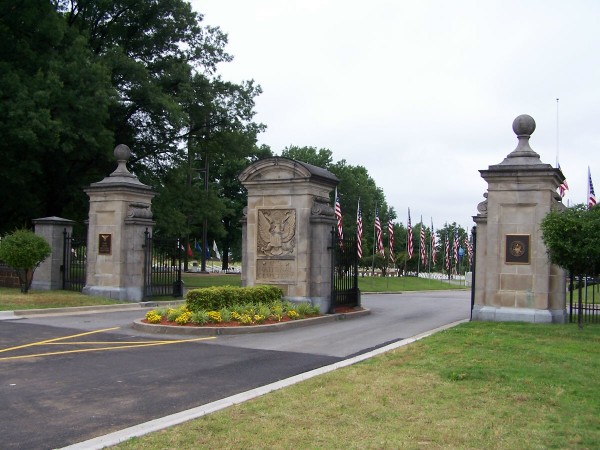
| The entrance gates of Fort Smith National Cemetery. The cemetery is surrounded by an imposing stone wall, a reminder of the earlier wall that once enclosed the nearby military post. |
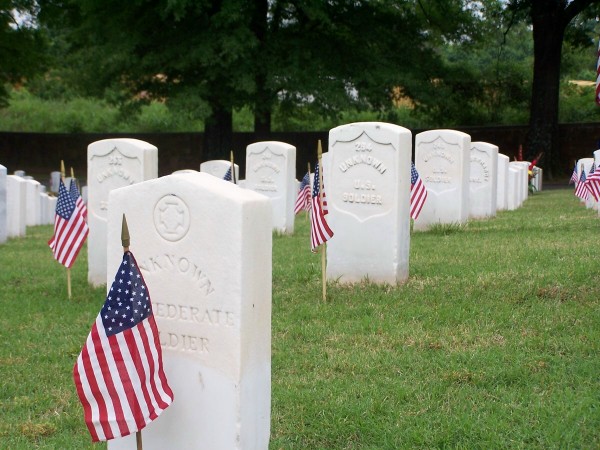
| Unknown Confederate soldiers rest within feet of unknown Union soldiers. Fort Smith National Cemetery is unique in this respect. A walk among its headstones gives full understanding to the terrible cost of the war fought by brother against brother. |
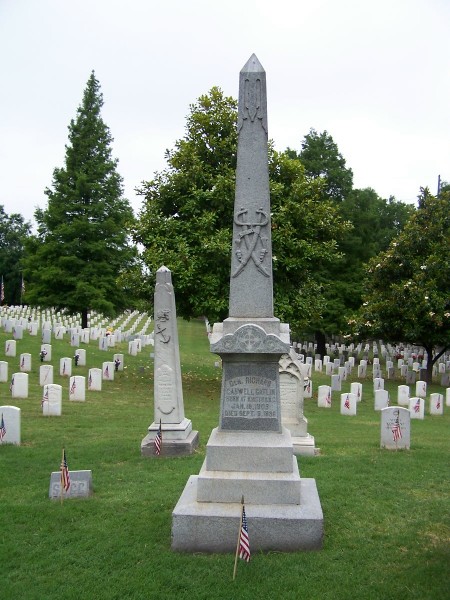
| The grave of Confederate Brigadier General Richard C. Gatlin. A major in the U.S. Army at the outbreak of the Civil War, Gatlin was taken prisoner when state troops occupied Fort Smith. He subsequently joined the Confederate cause and commanded troops in his native state of North Carolina. He returned to Arkansas after the war. |
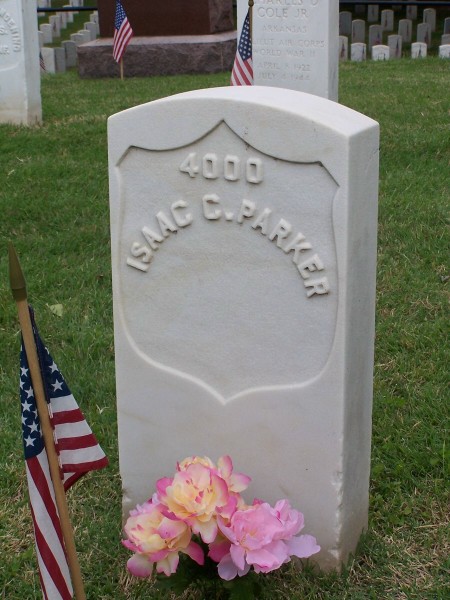
| U.S. District Judge Isaac C. Parker, a former Union army officer, was assigned the task of bringing law and order to the frontier. He became known as the "hanging judge" because more than 70 convicted outlaws met justice on the gallows at Fort Smith. It is a little known fact, however, that Parker lost more than 100 deputy marshals apprehending these men. |
Photographic Tour
 | |  | |  | |  | |  |